It's Kimika
itsKimika
Build a Layoff Plan Before You Need It: A Job Loss Preparation Guide
By @itsKimika
My mission is to help you become financially harder to break. Check out this article next Why the 50/30/20 Rule No Longer Works — And What to Use Instead this makes your finances more prepared in case the worse happens.
Let’s talk about something nobody puts on their vision board: getting laid off on a random Tuesday while you still have half a cold brew on your desk.
Not glamorous. Not Pinterest-worthy. But increasingly… not rare either.
And before anyone panics: this isn’t about expecting disaster. It’s about not being the person who’s Googling “what is unemployment and how does it work” while emotionally eating crackers in the dark.
Think of this as your career go bag—the same way people keep a flashlight, charger, and bottled water in case of emergencies. Except here, the emergency is your job disappearing faster than a Slack channel at 5:01 PM on a Friday.
Let’s build your Job Loss Emergency Kit.
1. The Financial Evacuation Route (a.k.a. “Show Me the Money I Can Actually Access”) 🛟
In a real emergency, you grab water and snacks. In a job emergency, you need runway—not vibes.
Your Runway Number (the one most people avoid)
Start here:
Monthly bare minimum survival cost (rent, groceries, utilities, insurance)
Monthly comfortable cost (your actual life: DoorDash, Pilates, Target “quick trip” disasters)
Now ask:
“If income stopped tomorrow, how long could I survive on cash alone?”
That number is your emotional reality check.
Not to scare you. To ground you.
Your Liquidity Map (aka: Where your money actually lives)
You don’t want to be figuring out access under pressure.
List:
- High-yield savings accounts (and where they’re held)
-Brokerage accounts (and how fast you can withdraw)
-Credit lines (not for spending, for emergency buffer awareness)
- PTO payout policy (this one surprises people more than it should)
Yes, this feels slightly unsexy. So does being broke.
We’re choosing boring on purpose.
2. Digital Rations (a.k.a. “Don’t Let Your Career Disappear Into a Corporate Black Hole”) 🛟
If you’ve ever had a company laptop, you already know: access can vanish instantly. No farewell tour. No emotional closure. Just poof.
So we quietly build your backup evidence.
The Wins Tracker (your personal highlight reel)
This is not optional if you want leverage later.
Keep a living doc with:
Metrics you influenced (revenue, cost savings, efficiency gains)
Projects you led (with outcomes, not just titles)
Problems you solved that stopped someone from quitting dramatically
Future-you writing a resume will treat this like gold.
The Artifact Vault
Save anything you actually own:
- Templates you created
- Frameworks you designed
- Non-confidential work samples
- Presentations you built from scratch
Not company secrets. Your intellectual fingerprints.
The “Receipts Folder”
This one feels awkward until you need it.
- Praise from Slack
- Emails saying “great work”
- Performance reviews
- Random “you saved this project” messages
Because memory is unreliable. Screenshots are not.
And yes—this also helps when impostor syndrome shows up uninvited at 2 AM.
3. The Communication Flare (a.k.a. “Don’t Wait Until You Need People to Remember You Exist”) 🛟
Most people treat networking like flossing: important, ignored, then urgently revisited before something stressful.
We’re not doing that.
Your Top 20 People List
Not 200. Not “everyone I’ve ever met once at a conference and made eye contact with.”
Just 20.
Include:
- Former managers who liked you (not tolerated you)
- Strong peers
- Recruiters who didn’t traumatize you
- One or two wildcard connectors
And yes—store actual contact info, not just LinkedIn. Platforms are not guarantees.
Your LinkedIn Lifeline
You don’t need to post daily thought leadership threads about “leaning into disruption.”
You just need:
- A clean, updated profile
- Recent accomplishments visible
- A presence that doesn’t scream “I’ve been hiding from reality”
Because rebuilding credibility while panicking is inefficient and emotionally expensive.
4. System Automation (a.k.a. “What Future-You Does in the First 24 Hours Without Crying Too Much”) 🛟
This is the part nobody thinks about until they’re in it.
So we pre-write the playbook.
Your Layoff Day Checklist
When emotions are high, decision-making goes low. So you outsource thinking to a list:
Hour 1–3
- Confirm details of severance package
- Ask for written documentation of final pay, benefits, and timeline
- Don’t sign anything immediately unless legally required
Day 1
- Download pay stubs, tax docs, and employment verification records
- Review healthcare coverage end date
- Save internal contacts you may need later (HR, manager, payroll)
Day 2–3
- File for unemployment (yes, even if you feel “weird” about it)
- Pause unnecessary subscriptions (this is where people accidentally keep paying for five streaming services out of grief)
- Update LinkedIn quietly (no dramatic captions required)
The goal is not speed for productivity’s sake.
It’s speed so you regain control before anxiety starts making decisions for you.
paycheck to prospertiy
If this is clicking — if you're already thinking about which stage you're in or what your Freedom percentage actually looks like right now — the full framework is waiting for you. Download the complete Fixed / Flexible / Freedom Framework™
A Reality Check (Because We’re Not Pretending This Is Fun) 🛟
Let’s be honest: building a layoff go bag feels a little like carrying an umbrella when the sky is blue.
Some people will say:
- “That’s negative thinking.”
- “Don’t manifest that.”
- “Just stay positive.”
Those people are usually not the ones paying your rent.
This isn’t about expecting the worst. It’s about removing chaos from an already chaotic moment.
Because layoffs aren’t just financial events. They’re identity shocks. And the less scrambling you have to do, the faster you can pivot instead of spiral.
Preparedness doesn’t create fear.
It reduces panic tax.
Final Thought: The Calm Version of You Is the One Who Prepared
The goal isn’t to live in fear of losing your job.
The goal is to make sure that if it ever happens, you’re not starting from zero emotionally, financially, or professionally.
Think of this as a quiet form of self-respect.
The version of you sitting in a meeting on a normal Tuesday doesn’t need to be afraid.
She just needs to have quietly left herself a map, some supplies, and a plan—just in case life does what it occasionally does.
And then she goes back to her cold brew.
The Money Manual
A free curated collection to help you transform the way you think about money.
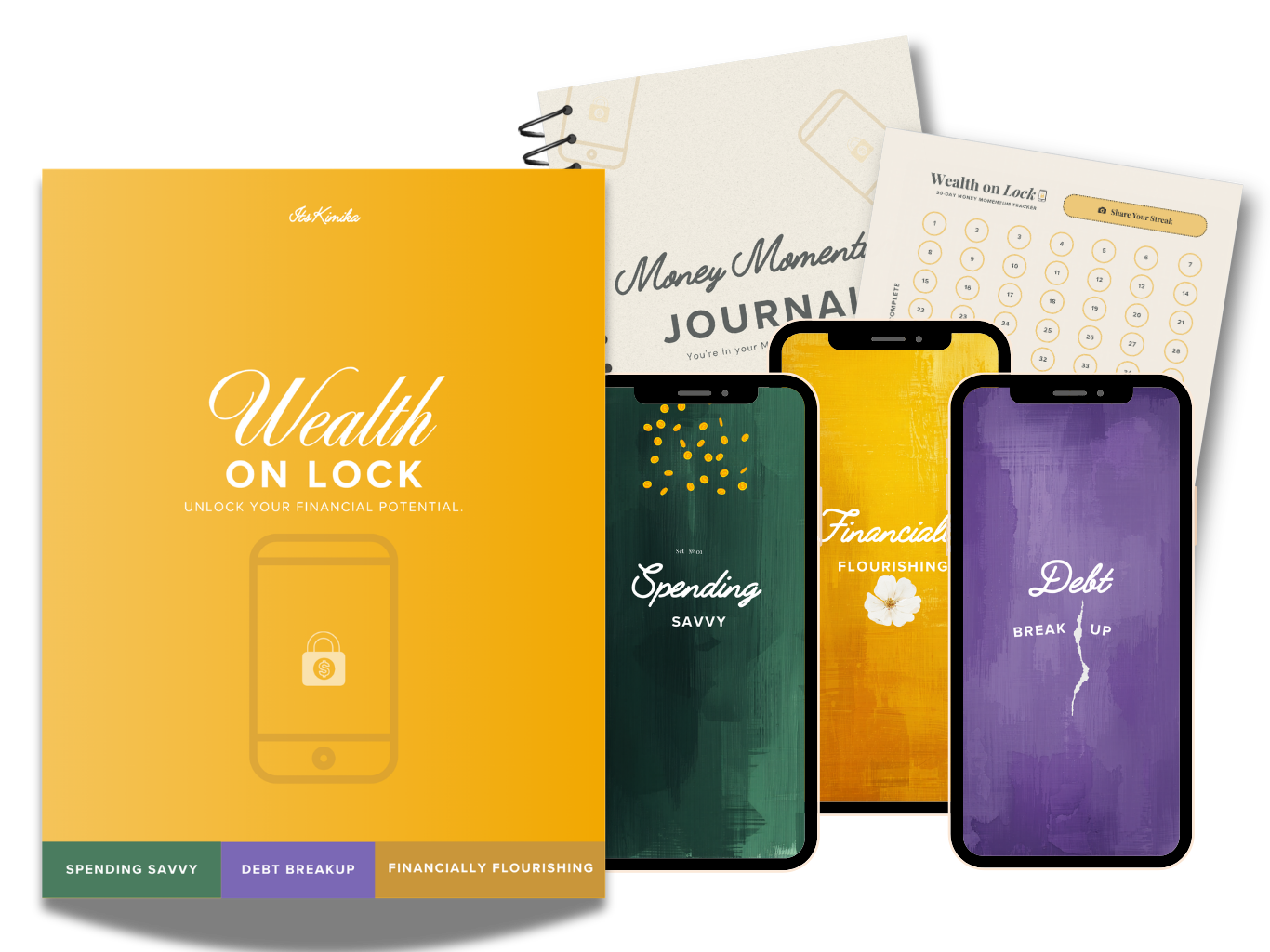
Download the free PDF here
This post scratches the surface. If you want the complete Fixed / Flexible / Freedom Framework™ — the full stage breakdowns, the splits, the system — it's yours. No email. No catch.